
Employee benefits open enrollment lasts just a few weeks. How it goes was decided months before.
Teams that struggle with employee benefits open enrollment often experience the same pattern: They start too late, underestimate the communication work, and spend the event itself putting out fires instead of supporting employees.
Open enrollment is when the consequences show up.
A well-run enrollment actually moves across five distinct phases, from the planning work that starts months out to what you do after the window closes. But first, it's helpful to define what open enrollment is and isn't.
What Is Employee Benefits Open Enrollment?
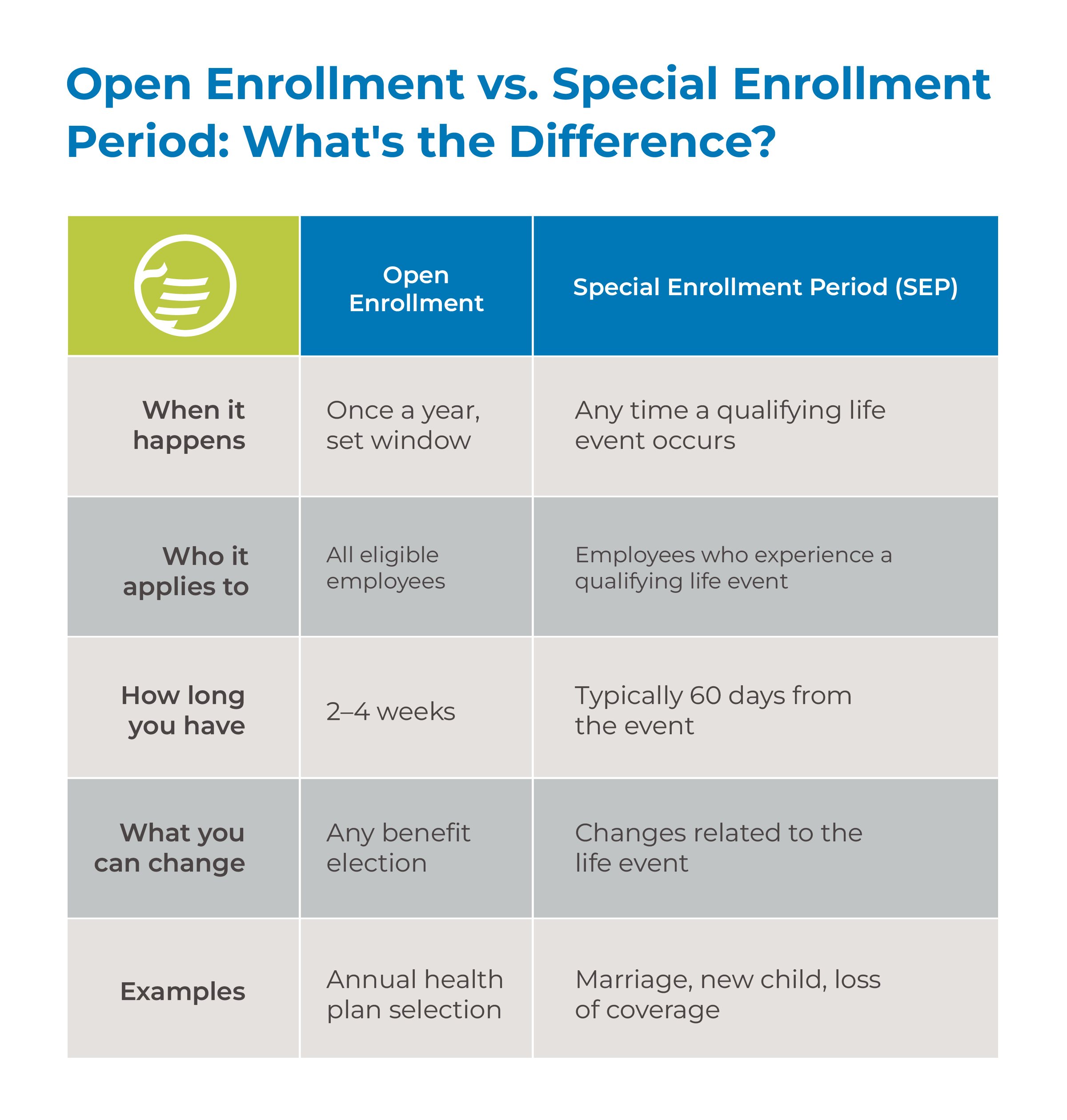
Open enrollment is the annual window, typically 2–4 weeks in the fall, when eligible employees can enroll in, change, or waive employer-sponsored benefits for the upcoming plan year. It's the primary opportunity to update:
- Health insurance plan (medical)
- Dental and vision coverage
- Life insurance and disability coverage
- Voluntary benefits like critical illness or hospital indemnity coverage
- Spending accounts: flexible spending accounts (FSA) or health savings accounts (HSA)
Elections made during open enrollment take effect at the start of the new plan year and typically can't be changed until the next cycle.
Open Enrollment vs. Annual Enrollment
The terms are often used interchangeably, but they describe slightly different things. Open enrollment refers to the specific window when employees make their elections. Annual enrollment is the broader process HR manages: the planning, communications, system configuration, carrier coordination, and compliance work surrounding it.
Who Is Required to Offer Open Enrollment?
Under the Affordable Care Act (ACA), applicable large employers — those with 50 or more full-time equivalent employees — are required to offer health coverage and provide an annual open enrollment period for eligible employees to accept or decline. The ACA sets a 14-day minimum, though most employers extend the window well beyond that to give employees adequate time to review their options.
New hires have to enroll in benefits within 30 days of their hire date or eligibility date. After that window closes, they can't change their coverage level until the next open enrollment cycle unless a qualifying life event applies. Beyond that, employees who experience qualifying life events — such as marriage, divorce, birth of a child, or loss of other coverage — may be eligible for a special enrollment period (SEP), generally within 60 days of the event.
Outside of those exceptions, employees who miss the enrollment deadline must wait until the next annual cycle.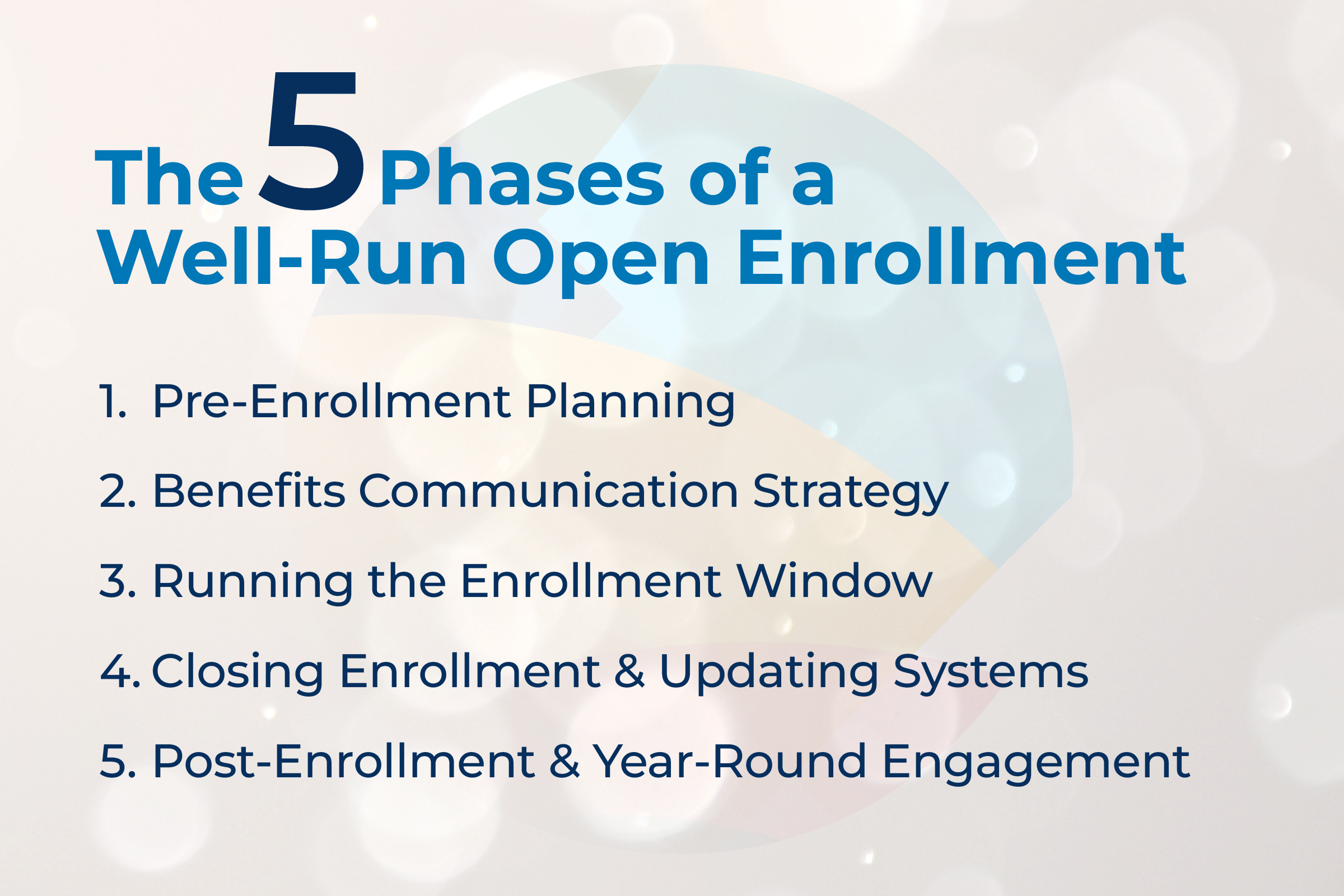
Phase 1 — Pre-Enrollment Planning (3–4 Months Out)
The single biggest driver of a smooth enrollment is how early you start planning. Benefits administrators who treat open enrollment as a year-round discipline have time to make deliberate decisions, build a real communication plan, and catch problems before they become crises.
Review Last Year's Enrollment Data
Before you plan for next year, understand what happened last year. Pull participation rates, plan migration patterns, spending account election rates, and any employee feedback or survey data you collected.
High HR inquiry volume during enrollment is often a signal that communications weren't clear or that the enrollment platform created friction. Low participation in certain plans (or unexpectedly high plan migration) may point to a cost-sharing problem or a communication gap worth fixing before it repeats. The data you collect now becomes the foundation of a smarter open enrollment strategy for next year.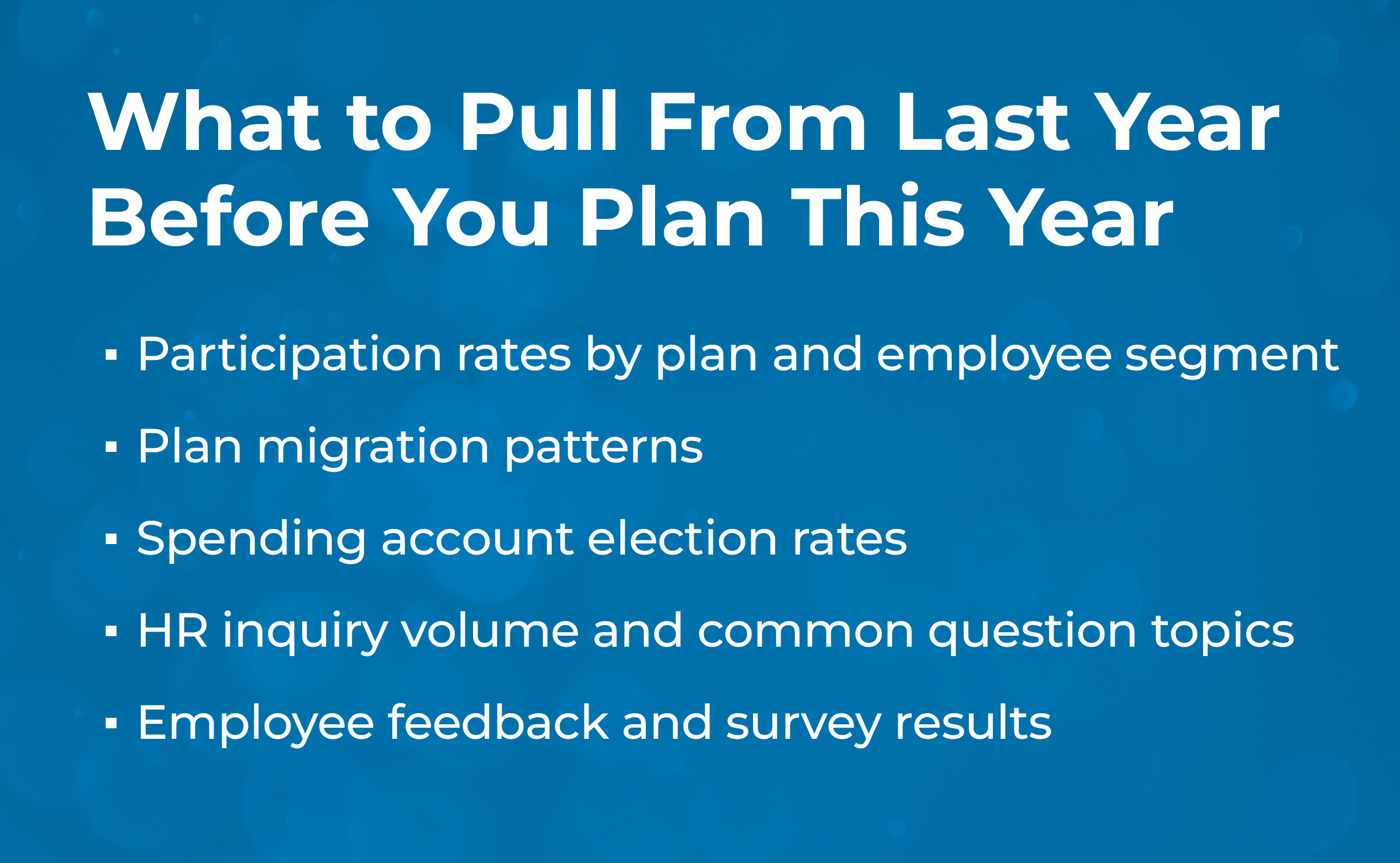
Evaluate and Finalize Plan Options
Once you have last year's data in hand, work with your insurance carriers and broker to get renewal rates for the upcoming year. Assess cost-sharing changes carefully: according to the Kaiser Family Foundation, employees contribute roughly 16% of premiums for single coverage and 26% for family coverage on average, and even modest shifts can affect how employees choose between health insurance plans.
This is also a good time to evaluate your voluntary and supplemental benefits lineup. Enrollment in voluntary health products has been rising steadily as employees look for broader coverage options including hospital indemnity, critical illness, and accident insurance. Getting these options in front of employees with clear explanations often drives higher participation than plan design changes do.
Decide what's changing and what's staying the same. Document it. You'll need that information for every piece of communication you build.
Build Your Enrollment Timeline
Work backward from your coverage start date and set a milestone for each of the following:
- Carrier renewal data finalized and reviewed
- Plan options confirmed and documented
- Enrollment system configured and tested
- First employee communication launched
- Mid-enrollment reminders sent
- Deadline and final confirmation notices distributed
Give employees at least two weeks in the enrollment window, though up to four is better for organizations with dispersed or shift-based workforces. Build in time for questions, because they will come.
Phase 2 — Benefits Communication Strategy
Most employees spend less than 30 minutes choosing a health plan — a decision that will govern their healthcare and financial exposure for an entire year. It's not because they don't care. Often the information is hard to navigate, the tradeoffs aren't obvious, and most people don't know what to ask.
Your communication strategy is the bridge between a benefits package your organization invested in and a workforce that actually understands and uses it. Seventy percent of benefits-eligible workers say they want help from their employer to better understand the benefits they've enrolled in throughout the year, not just at election time. That makes communication a year-round responsibility.
Build a Multi-Channel Communication Plan
Not everyone reads email. Not everyone has regular access to a desktop computer. Effective open enrollment communication reaches employees where they are:
- Email for detailed plan information and deadline reminders
- Mobile app for push notifications and on-the-go access
- Company intranet for centralized resources and FAQs
- Manager briefings to reach employees who need a human touchpoint
- Printed materials for frontline or shift-based workers without regular computer access
One channel can't reach everyone. Remote employees may need more digital touchpoints. Hourly workers may respond better to manager-led conversations than an email they'll read on a break. Employees who enrolled in a high-deductible health plan (HDHP) for the first time last year probably need a targeted explainer on how their HSA works.
Simplify the Message
Every communication should answer three questions — quickly and in this order:
- What changed?
- What do you need to do?
- By when?
Lead with what's new or different. Employees will tune out if the first thing they read is information they already know. Use plain language throughout and spell out every acronym on first use: FSA (flexible spending account), HSA (health savings account), and HDHP (high-deductible health plan).
While the summary of benefits and coverage documents your carriers provide are legally required, they're not a substitute for communications designed specifically for your workforce.
Arm Your Managers
Managers are often the first person an employee turns to with a benefits question. Whether or not they're equipped to answer it makes a real difference. A brief manager training session — or a simple FAQ document with the most common questions and where to direct employees for more help — goes a long way toward reducing misdirected inquiries and making employees feel supported.
Managers shouldn't be expected to be benefits experts. But they should know enough to point people in the right direction.
Building an effective benefits communication strategy is its own discipline, and one worth getting right well before enrollment opens.
Phase 3 — Running the Enrollment Window
When enrollment opens, HR's role changes. The planning work is done — now the job is monitoring participation, fielding questions, and keeping the window moving toward a clean close.
Set Up Self-Service Enrollment Technology
Online, self-service platforms have become the standard way to handle enrollment for benefits. They reduce manual data entry, minimize errors, give employees flexibility to enroll on their own schedule, and generate the data HR needs to manage the event in real time. But the quality of the enrollment experience matters — not just the existence of a portal.
Decision-support tools that deliver personalized plan recommendations — based on employee health data, financial situation, or prior utilization — help employees make smarter choices faster, especially when they're navigating complex plan options or comparing an HDHP with HSA against a traditional PPO for the first time.
A connected benefits experience, where employees access medical, dental, financial wellness tools, and decision support from a single hub, reduces the fragmentation that drives confusion and disengagement during enrollment.
Monitor Participation in Real Time
Don't wait until enrollment closes to find out who hasn't completed their elections. Most enrollment platforms provide real-time dashboards that let you track completion by department, location, or employee segment. Use them.
Set reminder cadences for employees — first at the midpoint of the window, last a few days before the deadline. Target them at employees who haven't started, rather than blasting the entire workforce again.
Specificity in reminders signals that your team is paying attention, which tends to improve response rates.
Support Employees Who Need It
Even with strong self-service tools, some employees need or want human support. Poor service accessibility — slow hold times, limited hours, inconsistent answers — is one of the most common friction points during high-volume enrollment periods. Make sure your service model can handle the volume before enrollment opens, not after complaints start coming in.
The highest-volume questions tend to cluster around the same topics: plan comparisons, dependent eligibility verification, how to elect or contribute to an FSA or HSA, and what happens if they miss the deadline. Anticipating these and building proactive content around them reduces inbound volume and improves the employee experience.
Phase 4 — Closing Enrollment and Updating Systems
When the enrollment window closes, the administrative work is just beginning.
Confirm Elections and Update Payroll
Collect and audit all elections before finalizing. Modern enrollment platforms automatically send election data to carriers and deduction data to payroll — which eliminates most manual entry and the errors that come with it. Your job at close is to confirm everything transmitted accurately and on time, and to work with your vendor to resolve any discrepancies before the plan year begins.
Handle Late or Missed Enrollments
Know your rules for employees who don't act before the deadline. Some benefit plan designs auto-renew prior elections; others will waive coverage. Neither outcome is necessarily right for every employee, and communicating the default clearly before enrollment closes can prompt last-minute action from employees who haven't engaged.
Employees who miss the window have one meaningful path to make changes later: a qualifying life event that triggers a special enrollment period. The specific documentation required is governed by your plan rules, but regardless of what those rules say, you need a clear internal process for collecting, reviewing and approving requests in a timely way.
If you don't have that process documented, build it now. Requests will come regardless of whether you're ready for them.
Stay Ahead of Compliance
Before the plan year begins (typically January 1 for calendar year plans), confirm that you have a system in place to meet your compliance obligations:
- Summary of Benefits and Coverage (SBC): Distribute to all enrolled employees.
- ACA reporting: File Forms 1094-C and 1095-C by the applicable deadlines (for ALEs).
- COBRA notices: Send required notifications to employees who lost coverage during the enrollment period.
If your organization's benefits administration setup involvesoutsourced or co-sourced administration, confirm with your partner which compliance tasks they're owning and where you retain responsibility.
Phase 5 — Post-Enrollment and Year-Round Engagement
Enrollment might end, but benefits administration doesn't.
A common mistake in benefits strategy is assuming employees are set once they've made their elections. Most spend very little time on those decisions. Confusion, underutilization, and missed savings don't disappear when enrollment closes. Those things happen when an employee hits a problem mid-year and calls HR to find out why their claim was denied.
Debrief and Measure
In the weeks after enrollment, do a debrief with your benefits team.
Compare participation rates and plan elections against prior years, but don't stop at the topline numbers. Look at what employees were calling or emailing support about. That question log is one of the most useful things you can carry into next year's planning. It tells you where your communications fell short and which benefits need better explanation before the next cycle.
A short employee pulse survey adds useful context, especially on the enrollment experience itself. Track a handful of KPIs year over year: mobile adoption, completion rates, satisfaction scores. Patterns emerge quickly.
Keep Benefits Visible Year-Round
Employees who understand and actively use their benefits are more engaged, more satisfied, and more likely to stay.
Build a year-round communication calendar. It doesn't need to be elaborate. A few well-timed touchpoints go a long way: HSA contribution reminders in January, mental health resources during high-stress periods, and open enrollment prep content in early fall.
Employees who already know what they have don't need as much hand-holding when it's time to make a decision.
Open Enrollment for Benefits Is a Managed Process, Not a Calendar Event
The HR teams that run open enrollment well aren't doing anything magical. They start planning months earlier than feels necessary. They build a communication plan before they build a timeline. They invest in enrollment technology that actually reduces friction, track participation in real time, and treat post-enrollment as the start of next year's prep.
The ones that still find fall feeling like a fire drill usually know exactly where things broke down — in the planning, the technology, or the communication strategy.
If open enrollment still feels like an annual scramble, the problem is usually upstream. Talk to Empyrean about making your next one run smoother.