
Benefits make up roughly 30% of total compensation, but without effective employee benefits communication, that investment might as well be invisible to them.
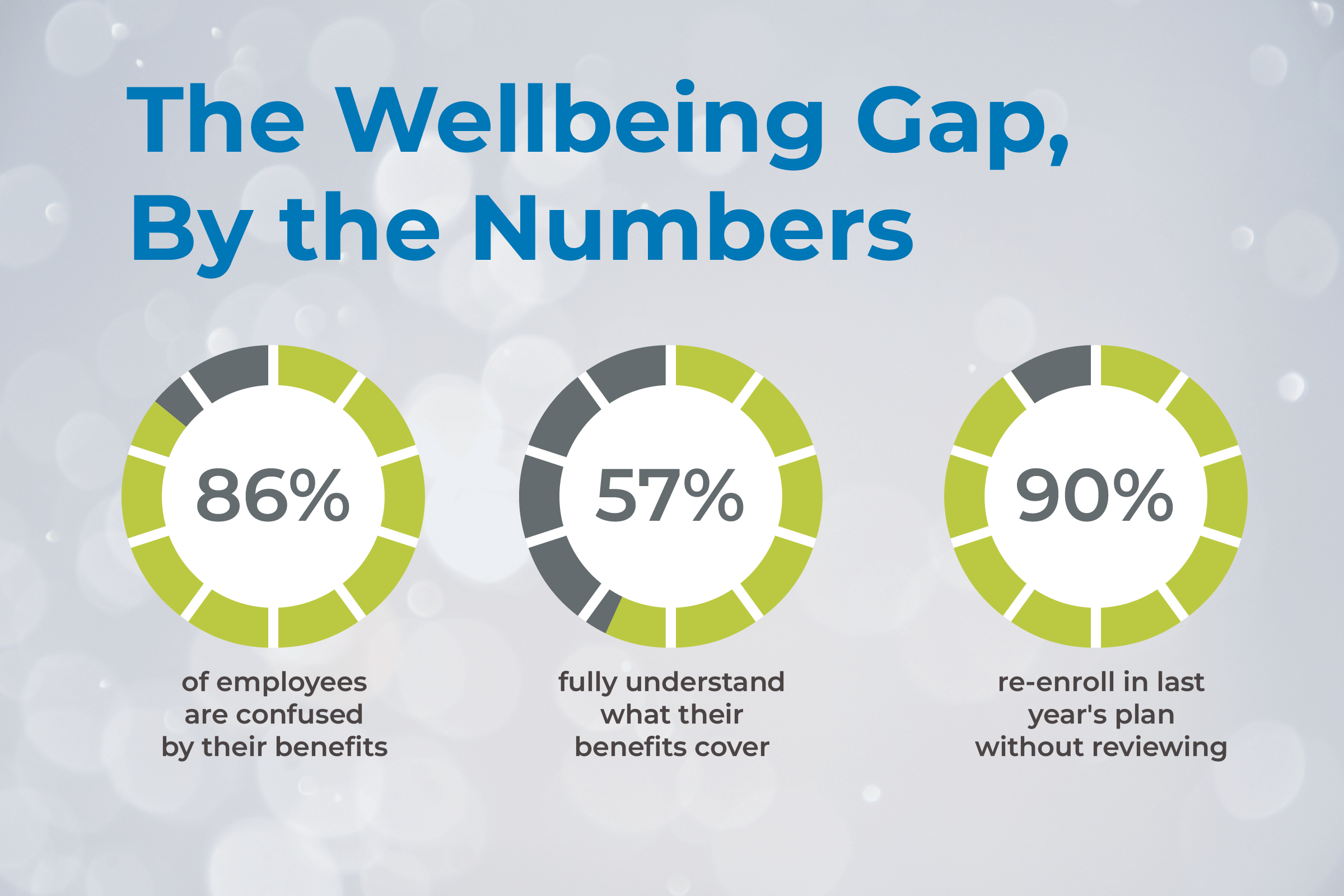
In many cases, employees are genuinely unsure what they have, what it covers, or how to use it. Prudential’s 2025 Benefits and Beyond study found that 86 percent of employees are confused by their benefits. Only 57% fully understand what they're entitled to. And roughly 90% simply re-elect their prior year plan without reviewing their options.
The plans are there, and the money is spent. What's missing is an employee benefits communication plan good enough to close the gap between what's offered and what employees actually understand and use. That gap is costing more than most HR and benefits leaders realize. Unlike plan design, it's also something you can fix without changing a single vendor or renegotiating a contract.
The Link Between Benefits Communication and Employee Engagement
Most HR leaders understand intuitively that engagement and benefits are connected. The data makes that connection explicit, and the numbers are larger than most people expect.
Employees who understand and are satisfied with their benefits are 1.4x more likely to feel engaged at work and 1.2x more likely to be productive, according to MetLife research. Those who actively use their benefits and have a positive experience are 2.4x more likely to feel holistically healthy. Itt's ultimately makes the difference between whether or not employees feel supported by their employer.
The loyalty dimension is just as striking. Fifty percent of employees say that better understanding of their benefits would increase their loyalty. Among employees who intend to stay long-term, 70% rate their employer’s benefits communication as "excellent." Among those who rate it merely "good," that figure drops to 24%.
Good communication builds loyalty. And loyal employees have generally experienced good communication. The pattern runs in both directions.
What Poor Benefits Communication Actually Costs
The cost of unclear benefits communication shows up most visibly in utilization.
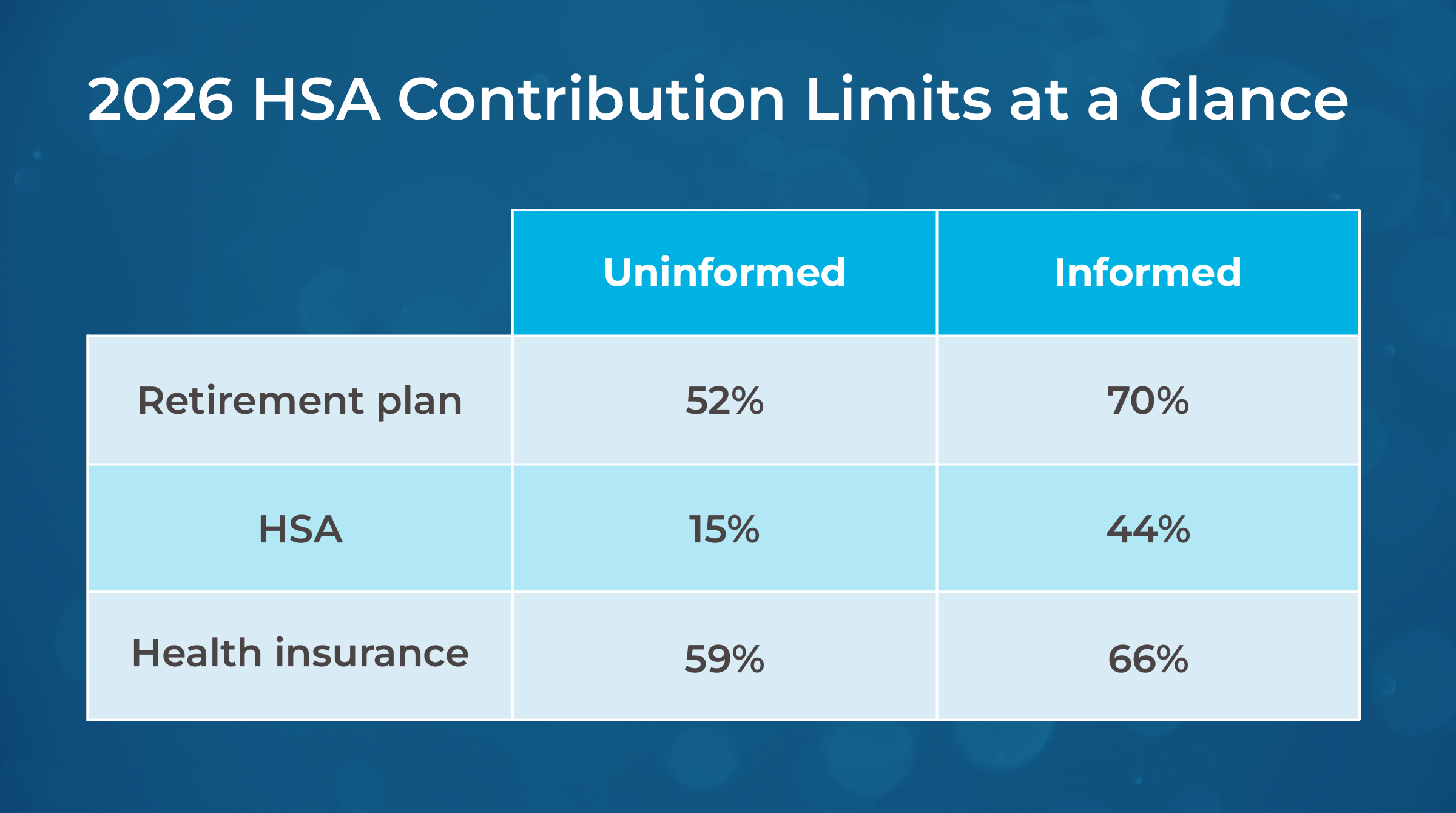
Consider two employees with access to the exact same benefits package. One received solid education about how their HSA works; the other didn't. The informed employee is nearly three times more likely to enroll: 44% participation among informed employees versus 15% among uninformed ones. Same benefits offered, radically different outcomes based entirely on how well they were communicated.
The pattern holds across benefit types. Retirement plan participation jumps from 52% to 70% when employees understand their options. Health insurance enrollment moves from 59% to 66%. The employer cost of offering these benefits is identical either way. The value employees actually receive is not.
Part of the problem is frequency. Forty-three percent of employees receive benefits communications once a year or not at all. That single moment, typically during open enrollment, becomes the only window for employees to understand benefits they'll use (or ignore) for the next 12 months. It's not enough. And it explains why roughly 90% of employees simply re-elect their prior year plan without reviewing their options.
3-Phase Communications Plan
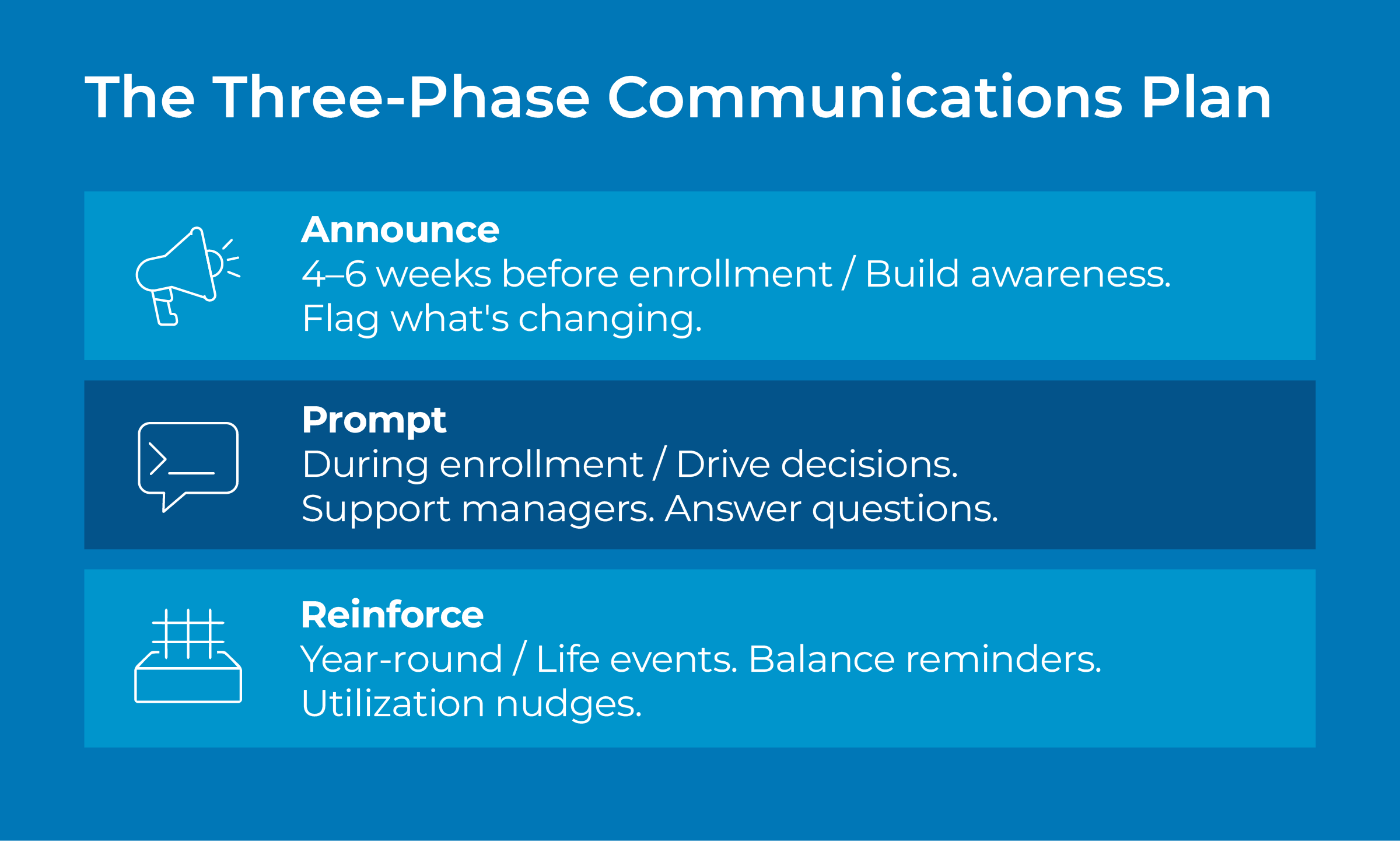
Fixing benefits communication doesn't require a technology overhaul. It requires treating communication as a year-round discipline with a clear structure. The most effectivebenefits communication strategies follow a three-phase cadence built around how employees actually make decisions.
Phase 1: Announce (4–6 weeks before enrollment)
The goal here is awareness and expectation-setting, not driving decisions. Let employees know what's coming, what's changing, and what they'll need to do. This is the moment to share benefits information about plan changes, new offerings, or cost shifts before employees hit the enrollment portal cold.
Starting early reduces the cognitive load of enrollment itself. Employees who've had a few weeks to absorb what's on the table make more deliberate decisions than those encountering everything for the first time during a 30-minute window.
Phase 2: Prompt (during the enrollment window)
This phase is about decision support: not just deadline reminders, but personalized recommendations, side-by-side plan comparisons, explainer content that helps employees communicate benefits to their families, and clear calls to action. Every benefits decision an employee makes during this window is shaped by how well you've prepared them. Manager enablement is especially effective here. Equipping managers with simple talking points and FAQs gives employees a human resource to turn to when the portal falls short.
Phase 3: Reinforce (year-round)
This is where most benefits communication programs stop short. Ongoing communication keeps benefits top of mind outside enrollment season and drives real utilization improvements. Life event triggers (marriage, new child, job change) prompt timely outreach. FSA (flexible spending account) and HSA balance reminders help employees avoid forfeitures. Mental health awareness campaigns draw attention to EAPs (employee assistance programs) and other resources that are often available but go unused.
A connected employee experience is built over 12 months of consistent, relevant touchpoints, not in a single enrollment window.
Channels That Actually Work
A strong communications plan is multi-channel. Engaging employees across different formats and mediums is what drives results, especially in a diverse workforce where people have different jobs, schedules, and preferred ways of receiving information. The key is to meet employees where they are.
SMS and Mobile Push
Text messages have a 98% open rate, with 90% read within three minutes. No other communication channel comes close. For frontline, deskless, and shift-based workforces who aren't in front of a computer during the workday, mobile is often the only channel that reliably reaches people. A platform with mobile-first omnichannel delivery, like Empyrean's, which brings together personalized benefits communications across SMS, email, and app content, closes that gap in ways email-only programs simply can't match.
Video
People retain 95% of information delivered through video but only 10% when relying on text alone. That advantage is most pronounced for complex topics: how a high-deductible health plan (HDHP) works versus a PPO, the mechanics of HSA contributions and withdrawals, what an EAP actually covers, etc. Short explainer videos embedded in enrollment materials or sent as standalone communications are among the highest-impact investments a benefits team can make.
AI-Powered Digital AssistantsChatbots
This is the stat that tends to surprise people: Students using AI-powered education tools scored an average of 92% on understanding what they were learning, compared to 69% with traditional resources. That same boost can come to your benefits education, too. AI-driven Q&A can handle benefits questions around the clock, with no hold times and no waiting on an HR ticket, all while supporting multiple languages, personalization, and communication styles across complex, distributed workforces.
Manager Enablement
Managers are among the most trusted information sources employees have. HR teams that equip managers with toolkits, clear FAQs, simple talking points, and enrollment deadline reminders see higher completion rates and fewer last-minute support requests. Low cost, high return, and easy to underestimate.
Measuring What's Working
Improving benefits communication requires knowing what's landing. The most useful metrics aren't complicated, but they do require consistency to be meaningful.
- Enrollment completion rate and pace — Are employees finishing before the deadline, or clustering at the end?
- Adoption rates by benefit type, year-over-year — Is participation in HSAs, EAPs, and other high-value benefits going up?
- Benefits-related support ticket volume — A high volume of "how do I..." questions is a direct proxy for communication gaps
- Employee satisfaction with benefits — Pulse surveys or annual engagement data surface perception trends before they become retention issues
- Open and click rates by channel — Not all channels perform equally for all populations; tracking by segment helps teams put effort where it counts
Tracking these consistently turns benefits communication from a gut-feel exercise into something HR leaders can defend to the C-suite.
Communication Is What Makes Benefits Work
The same benefits, communicated clearly, produce dramatically different outcomes than benefits communicated poorly. That shows up in adoption rates, engagement scores, and retention data. A three-phase communication framework, the right mix of channels, and year-round reinforcement are what separate a benefits program employees value from one they forget about until next November.
For HR teams ready to put the infrastructure behind that kind of employee benefits communication strategy, Empyrean Connect brings together omnichannel delivery, AI-powered guidance, and the Experience Lab's design and content capabilities into a single connected platform. See how it works.